
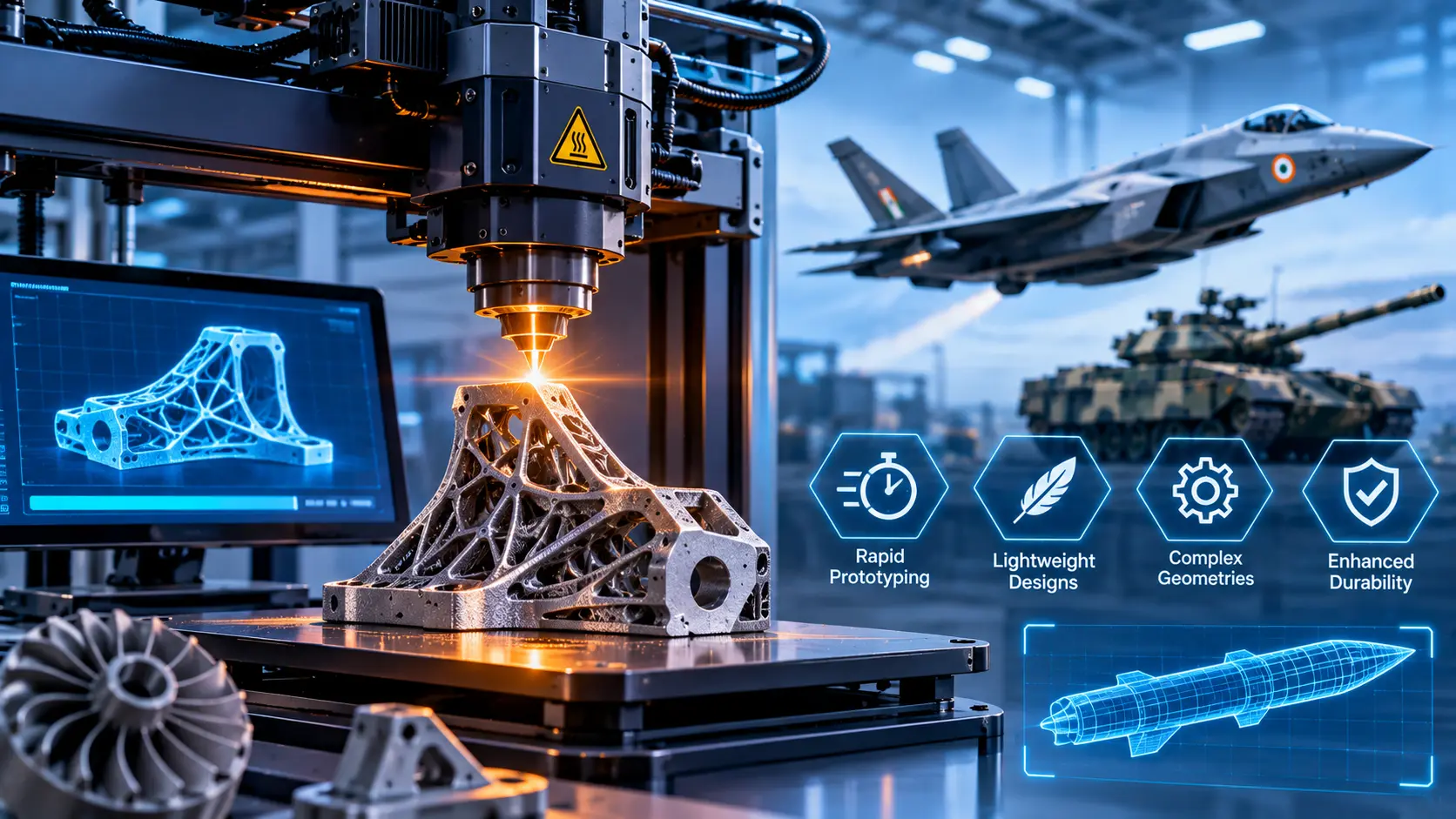
The future of defence manufacturing is increasingly shaped by advanced production technologies. Among them, 3D printing, also known as additive manufacturing, is creating new possibilities for designing and producing complex components.
Unlike conventional manufacturing, which often involves cutting or shaping material, additive manufacturing builds objects layer by layer using digital designs. This approach allows manufacturers to produce intricate geometries, lightweight structures and customised components with greater design flexibility.
A New Approach to Defence Manufacturing
The future of defence manufacturing is increasingly shaped by advanced production technologies. Among them, 3D printing, also known as additive manufacturing, is creating new possibilities for designing and producing complex components.
Unlike conventional manufacturing, which often involves cutting or shaping material, additive manufacturing builds objects layer by layer using digital designs. This approach allows manufacturers to produce intricate geometries, lightweight structures and customised components with greater design flexibility.
Transforming Aerospace and Defence Production
Additive manufacturing has potential applications across several defence sectors.
In aerospace, it can support the production of complex components, brackets, ducts and lightweight structural parts. In ground defence systems, it can help manufacture specialised equipment housings and customised components.
It can also support rapid prototyping, allowing engineers to test designs, identify limitations and improve products before moving towards full-scale production.
Another important application is the production of selected replacement parts, which could help reduce dependence on long and complex supply chains.
Strengthening India's Indigenous Manufacturing Ecosystem
India's growing defence manufacturing sector presents opportunities to expand the use of additive manufacturing technologies.
Startups, MSMEs and research institutions can contribute through metal 3D printing, polymer-based manufacturing, material development, precision engineering and digital design solutions.
Developing domestic expertise in advanced manufacturing equipment and specialised materials can strengthen supply-chain resilience and support the country's long-term technological independence.
Challenges in Moving Towards Industrial Adoption
Despite its potential, defence-grade additive manufacturing requires rigorous quality control. Material consistency, structural strength, repeatability, certification and component traceability are essential considerations.
Manufacturers must establish reliable production processes and validate components under relevant operating conditions before they can be used in critical defence applications.
Building the Next Generation of Defence Production
Additive manufacturing is creating opportunities to rethink how defence components are designed, tested and produced. Its integration with digital engineering, automation and advanced materials could make manufacturing more flexible and responsive.
By investing in indigenous capabilities and industry collaboration, India can strengthen its position in next-generation defence manufacturing.
BDTS 2027 – Forging the Sovereign Battlespace brings together defence manufacturers, startups, researchers and technology innovators to explore the advanced manufacturing solutions shaping India's defence future.