

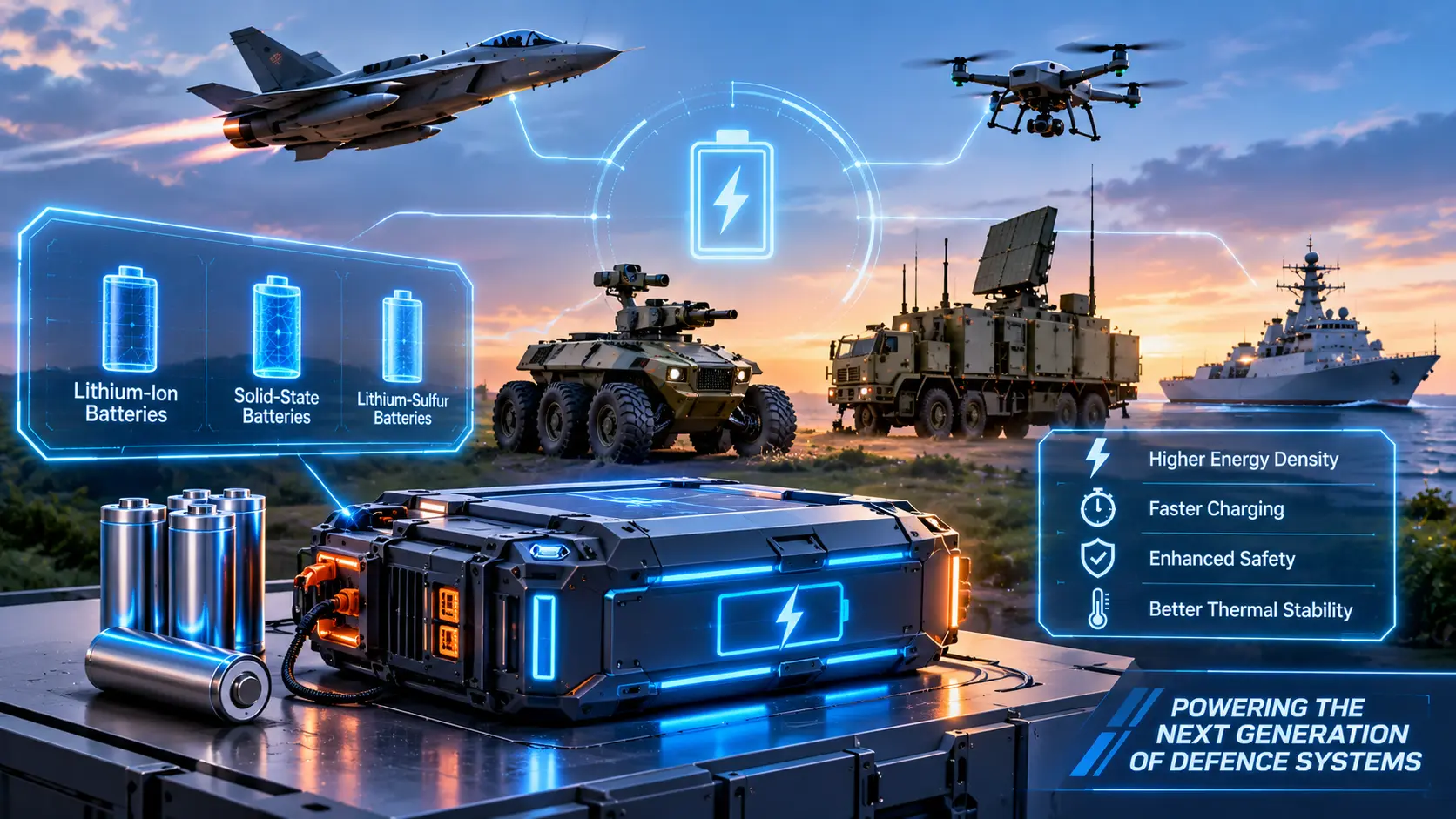
As defence platforms become increasingly digital, autonomous and connected, reliable energy supply is becoming a critical requirement.
Unmanned aerial vehicles, ground robots, portable communication systems, surveillance equipment and advanced electronic platforms all depend on efficient power sources. Their operational performance is closely linked to battery capacity, energy density, charging time and overall reliability.
This is making advanced energy storage an important area of defence technology development.
Energy: The Foundation of Modern Defence Technology
As defence platforms become increasingly digital, autonomous and connected, reliable energy supply is becoming a critical requirement.
Unmanned aerial vehicles, ground robots, portable communication systems, surveillance equipment and advanced electronic platforms all depend on efficient power sources. Their operational performance is closely linked to battery capacity, energy density, charging time and overall reliability.
This is making advanced energy storage an important area of defence technology development.
Beyond Conventional Battery Systems
Battery research is moving towards solutions that offer improved energy density, longer operating life, faster charging and better thermal stability.
Lithium-ion batteries currently support several portable and mobile applications. Emerging solid-state battery technologies aim to improve energy storage performance and safety through alternative electrolyte designs.
Other developments include lithium-sulphur batteries, advanced battery management systems and hybrid energy architectures.
These technologies could support longer-endurance drones, autonomous ground platforms, portable military electronics and next-generation defence equipment.
Supporting India's Indigenous Defence Ecosystem
India has opportunities to strengthen its domestic capabilities in battery cells, power electronics, thermal management, battery management software and advanced materials.
Startups, MSMEs, research institutions and established manufacturers can contribute to developing specialised energy solutions for defence applications.
Building domestic manufacturing capabilities can also help reduce supply-chain vulnerabilities and strengthen the availability of critical energy components.
Challenges in Defence Energy Storage
Military battery systems must operate reliably under demanding conditions. Temperature variations, vibration, physical stress, charging infrastructure and long-term storage requirements all influence performance.
For defence applications, technologies must undergo rigorous testing to establish safety, durability and operational suitability.
Developing reliable battery systems therefore requires collaboration across materials science, electronics engineering, manufacturing and system integration.
Powering the Future of Defence Innovation
Energy storage will play an increasingly important role as defence platforms become more autonomous, mobile and electronically advanced.
Investing in indigenous battery research and manufacturing can strengthen India's defence supply chain while creating opportunities for emerging technology companies.
BDTS 2027 – Forging the Sovereign Battlespace brings together defence leaders, manufacturers, startups, researchers and technology innovators to explore the technologies powering India's next generation of defence capabilities.