

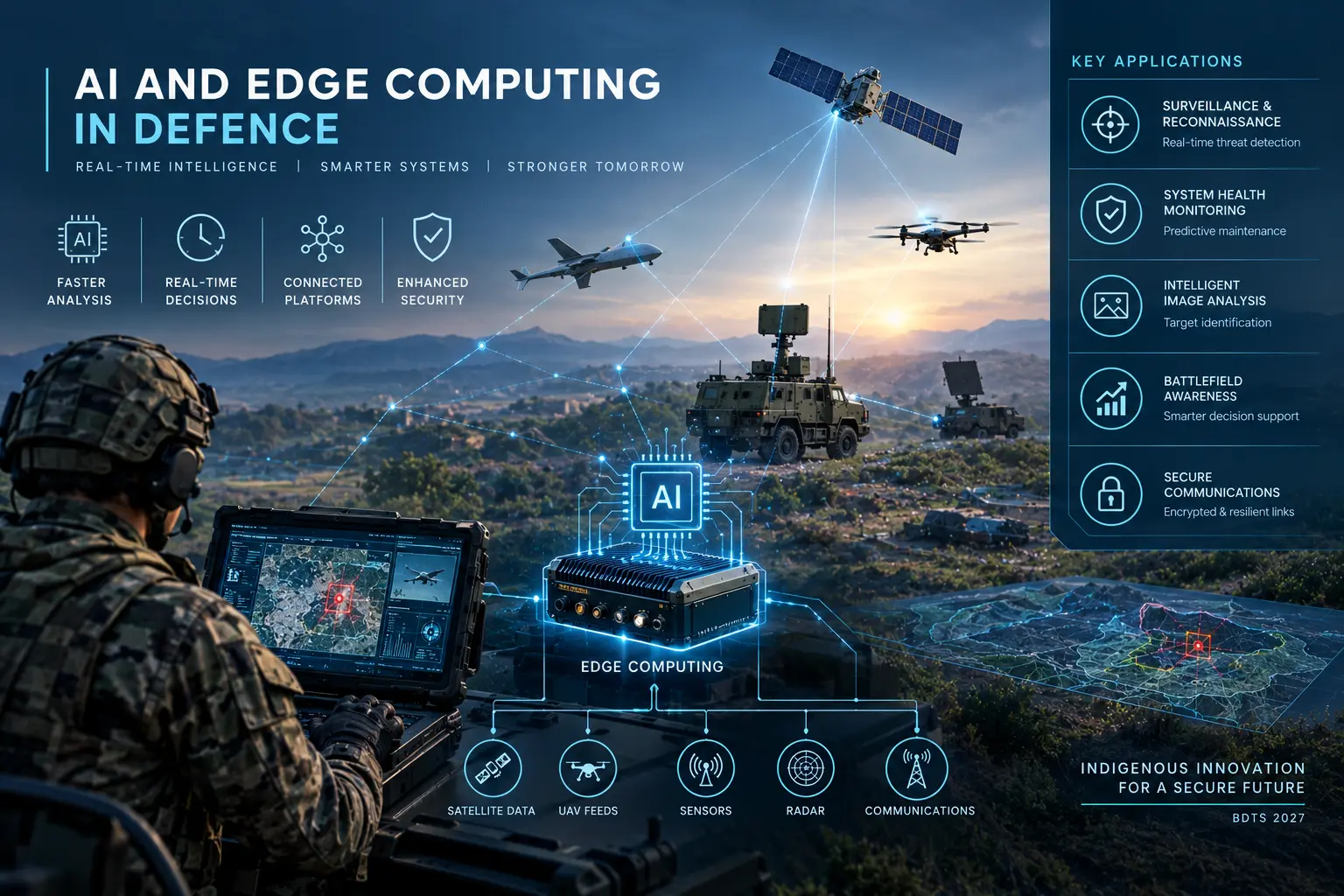
Modern defence operations generate enormous volumes of data from radar systems, satellites, surveillance cameras, unmanned platforms and communication networks. Converting this information into timely, actionable intelligence is becoming increasingly important as defence environments grow more complex.
Artificial intelligence (AI) and edge computing are helping address this challenge by enabling data to be analysed closer to where it is collected. For India, these technologies offer opportunities to develop smarter defence systems, strengthen indigenous capabilities and improve the resilience of military information infrastructure.
Why Edge Computing Matters in Defence
Traditional computing architectures often depend on transferring data to centralised servers for processing. In environments where connectivity is limited or communication delays matter, this approach may not always be practical.
Edge computing processes information on or near the device that generates it. For defence applications, this can reduce the amount of data that must be transmitted, support faster responses and allow certain functions to continue when network connectivity is disrupted.
The Role of AI in Real-Time Intelligence
AI can help analyse sensor feeds, identify patterns and prioritise information that requires further assessment. When combined with edge computing, AI models can process selected data locally rather than relying entirely on remote computing infrastructure.
Potential applications include equipment condition monitoring, image analysis, surveillance support and anomaly detection in complex sensor networks. Reliable performance depends on representative training data, sufficient computing resources, robust cybersecurity and continuous validation.
Human oversight remains essential when AI-generated insights inform high-consequence defence decisions.
Opportunities for India's Defence Startups and MSMEs
The growing demand for intelligent, connected defence systems creates opportunities for Indian startups, MSMEs and research institutions working in embedded computing, AI software, rugged electronics, sensor integration and secure communications.
Developing compact, energy-efficient systems that can operate in challenging conditions is an important engineering priority. Collaboration with established manufacturers and defence stakeholders can help innovators test their technologies, improve interoperability and progress from prototypes towards production-ready solutions.
BDTS 2027: Connecting Intelligence with Innovation
Bharat Defence Tech Show (BDTS) 2027 provides a platform for engagement across India's defence technology ecosystem. AI and edge computing offer valuable areas for discussion among technology developers, researchers, manufacturers and industry stakeholders working towards next-generation defence capabilities.
Conclusion
The combination of AI and edge computing can help defence systems process information closer to its source and support faster, more informed assessments. Advancing indigenous expertise in these technologies will be important for India's efforts to build secure, reliable and resilient defence systems.