

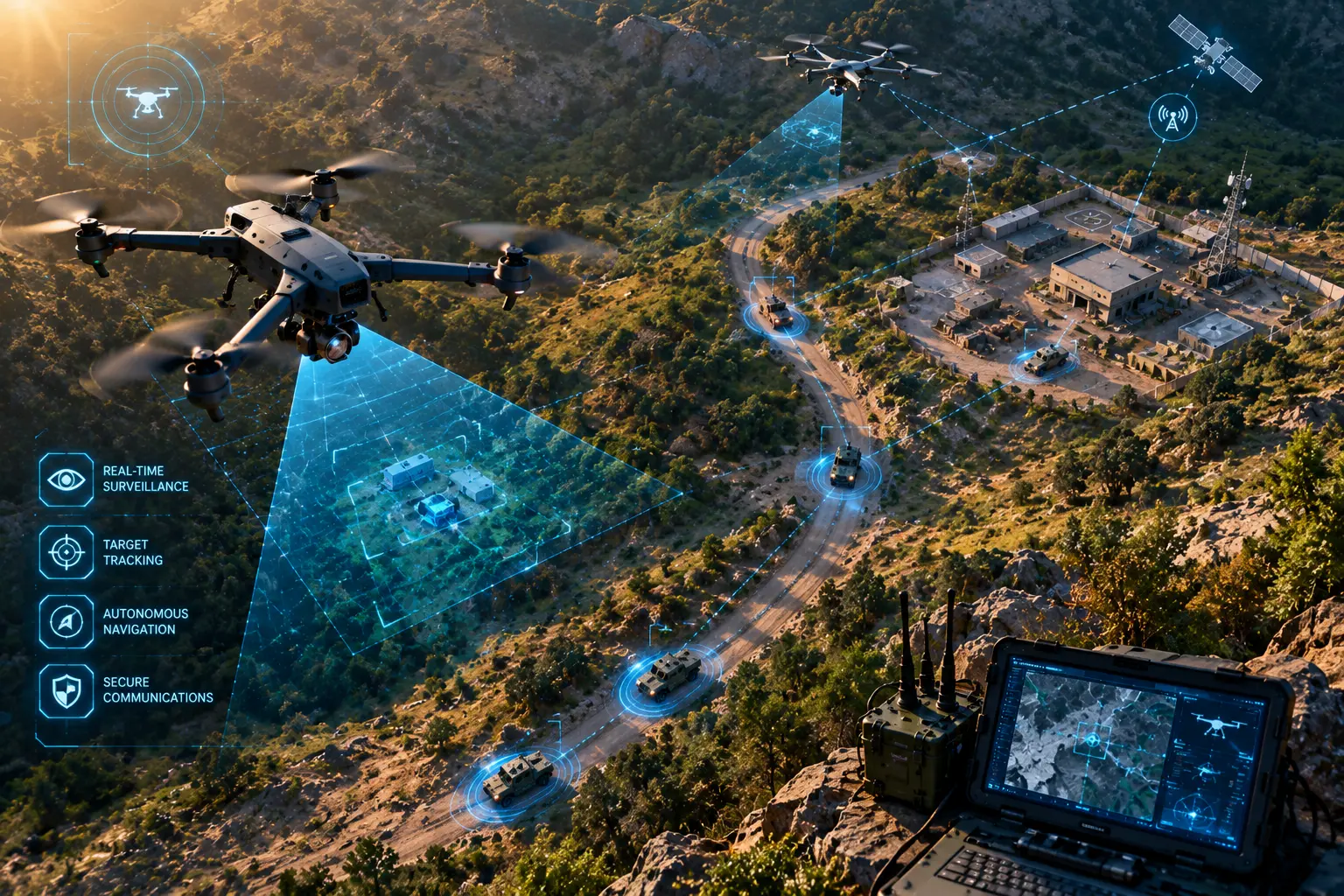
Autonomous Systems and the Future Battlefield
The future of defence is increasingly shaped by intelligent machines capable of sensing their surroundings, processing information and performing tasks with varying levels of human supervision. Autonomous systems are becoming an important area of defence innovation, with applications ranging from aerial surveillance and unmanned ground vehicles to maritime monitoring and logistics support.
For India, developing these capabilities offers an opportunity to strengthen indigenous technology, improve operational efficiency and build a more resilient defence manufacturing ecosystem.
How Autonomous Systems Are Transforming Defence
Autonomous systems combine sensors, software, artificial intelligence and control technologies to perform specific tasks with reduced human intervention. Unmanned aerial vehicles can support reconnaissance and surveillance, while ground-based robotic platforms can assist with inspection, logistics and operations in difficult environments.
These systems can help reduce personnel exposure to hazardous conditions and provide valuable information in complex operational settings. Their effectiveness, however, depends on reliable navigation, secure communications and robust performance under changing conditions.
The Technologies Driving Autonomous Defence
Advances in computer vision, machine learning, edge computing and sensor fusion are expanding the capabilities of autonomous platforms. Multiple sensors can help systems interpret their surroundings, while onboard computing enables faster processing when continuous connectivity is unavailable.
Cybersecurity, reliability testing and interoperability are equally important. Defence applications require systems that can operate predictably, handle unexpected situations and maintain appropriate human oversight, particularly in safety-critical decisions.
Opportunities for Indian Startups and MSMEs
India's growing defence technology ecosystem offers opportunities for startups, MSMEs and research institutions to develop specialised components and solutions. These include navigation systems, embedded electronics, robotic platforms, communication modules, sensing technologies and autonomous software.
Partnerships with established manufacturers and defence stakeholders can help innovators validate prototypes, meet technical requirements and move towards scalable production. Indigenous development can also strengthen domestic supply chains and reduce dependence on imported technologies.
BDTS 2027: Connecting Innovation with Industry
Bharat Defence Tech Show (BDTS) 2027 provides a platform for discussions and collaboration across India's defence technology ecosystem. Autonomous systems offer a strategic area for engagement between emerging innovators, manufacturers, researchers and industry stakeholders.
Conclusion
Autonomous systems will continue to influence how defence organisations approach surveillance, logistics, mobility and situational awareness. India's progress will depend on responsible innovation, reliable engineering and the ability to transform promising research into deployable, scalable technologies.
By encouraging collaboration across the defence ecosystem, BDTS 2027 can contribute to conversations shaping the next generation of indigenous defence capabilities.