

A military satellite that runs out of fuel is, in effect, dead — no matter how capable its sensors. As India's dependence on space-based surveillance, communication and navigation deepens, the ability to refuel, repair and reposition satellites in orbit becomes a strategic necessity rather than a luxury.
On-orbit servicing (OOS) covers a family of capabilities: refuelling satellites to extend their life, replacing failed components, upgrading payloads, and even towing dead spacecraft to safe disposal orbits. For a nation that invests heavily in each launch, OOS multiplies the return on every rupee sent to space.
The defence implications are sharp. A reconnaissance satellite that can be repositioned on demand becomes far harder for an adversary to predict or evade. A constellation that can be repaired rather than replaced stays resilient under attack. And robotic servicing platforms — guided by autonomous rendezvous and AI-driven manipulation — sit precisely at the intersection of space-tech and autonomy that defines the Bengaluru colloquium theme.
India's ecosystem is beginning to move. ISRO's docking experiments have proven the nation can perform the delicate orbital ballet OOS demands, and a new generation of space-tech startups is building the robotics, vision systems and propulsion needed to service assets in orbit.
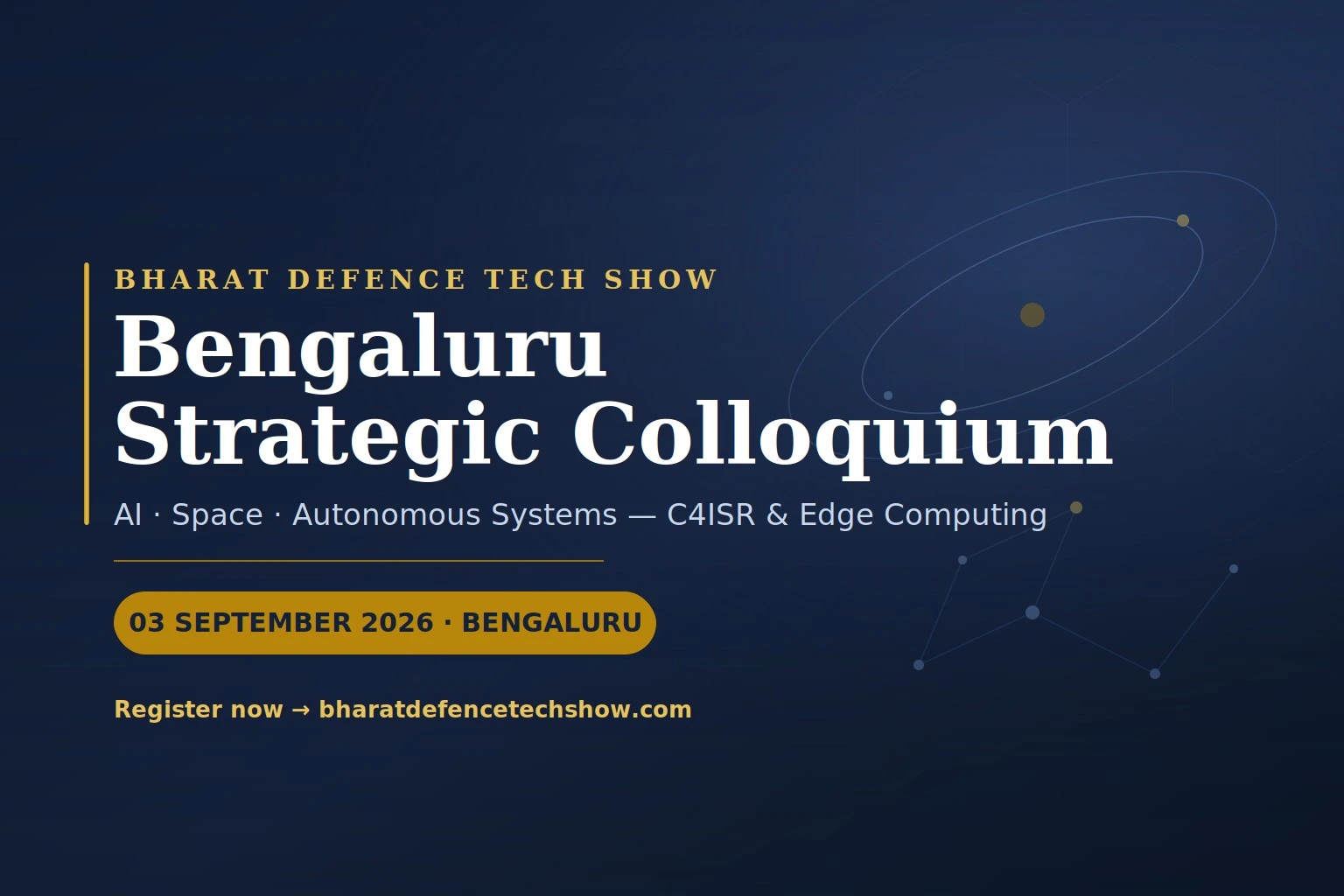
The barriers are real: precise autonomous navigation in space, secure command links resistant to jamming, and a regulatory framework for operations near other nations' assets. At the BDTS Bengaluru Strategic Colloquium on 3 September 2026, space-tech innovators, ISRO-ecosystem leaders and defence stakeholders will map how India can build sovereign on-orbit servicing capability — and turn orbital endurance into strategic advantage.