

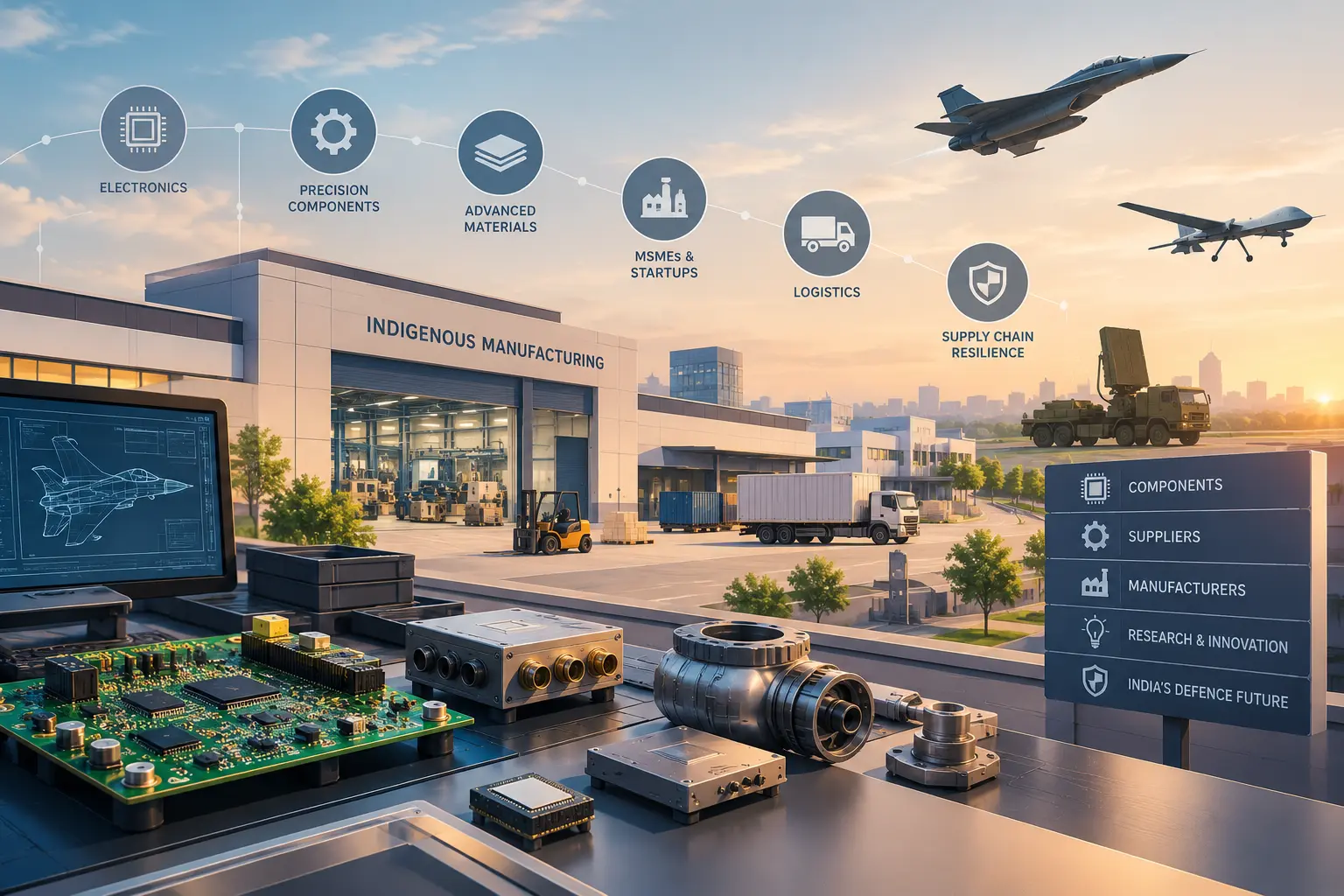
Defence Supply Chains: Strengthening India's Indigenous Manufacturing Ecosystem
Behind every advanced defence platform lies a network of component manufacturers, electronics specialists, material suppliers, engineering firms and technology developers. The strength of this network directly influences production capacity, system reliability and long-term technological independence.
As India expands its defence manufacturing capabilities, building resilient domestic supply chains is becoming an important strategic priority. The focus is not simply on assembling finished platforms but also on developing the critical components, specialised materials and intellectual property that support them.
Why Resilient Defence Supply Chains Matter
Modern defence systems rely on complex networks of suppliers spread across multiple industries. Dependence on limited sources for critical electronics, sensors, precision components or specialised materials can create vulnerabilities when global supply chains face disruption.
A stronger domestic supplier base can improve manufacturing continuity, support maintenance requirements and create greater control over technology development. Diversifying suppliers and establishing reliable quality standards are equally important for long-term resilience.
The Role of Indian MSMEs and Startups
Indian micro, small and medium enterprises (MSMEs) and defence startups can contribute specialised expertise in precision engineering, embedded electronics, advanced materials, software, testing and component manufacturing.
However, becoming part of the defence supply chain requires more than an innovative product. Suppliers must demonstrate consistent quality, traceability, technical compliance, production capacity and dependable delivery. Understanding the requirements of larger manufacturers can help smaller businesses prepare for long-term industrial partnerships.
From Indigenous Components to Scalable Production
Developing a component locally is only one step towards self-reliance. The next challenge is achieving repeatable manufacturing, validating performance and ensuring that products can be supplied at the required scale.
Investment in research, testing infrastructure, skilled talent and manufacturing processes can help bridge the gap between prototypes and production-ready components. Strong coordination between research institutions, startups, MSMEs and established manufacturers can accelerate this transition.
BDTS 2027: Connecting Innovation with Industry
Bharat Defence Tech Show (BDTS) 2027 offers a platform for engagement across India's defence technology ecosystem. Discussions around indigenous manufacturing and supply-chain resilience can help highlight emerging capabilities, identify collaboration opportunities and encourage connections between technology innovators and industry stakeholders.
Conclusion
India's defence ambitions depend on more than advanced platforms; they require a dependable ecosystem capable of designing, manufacturing and supplying critical technologies. Strengthening domestic supply chains can support industrial resilience, encourage innovation and create opportunities for Indian enterprises to contribute to the next generation of defence capabilities.