

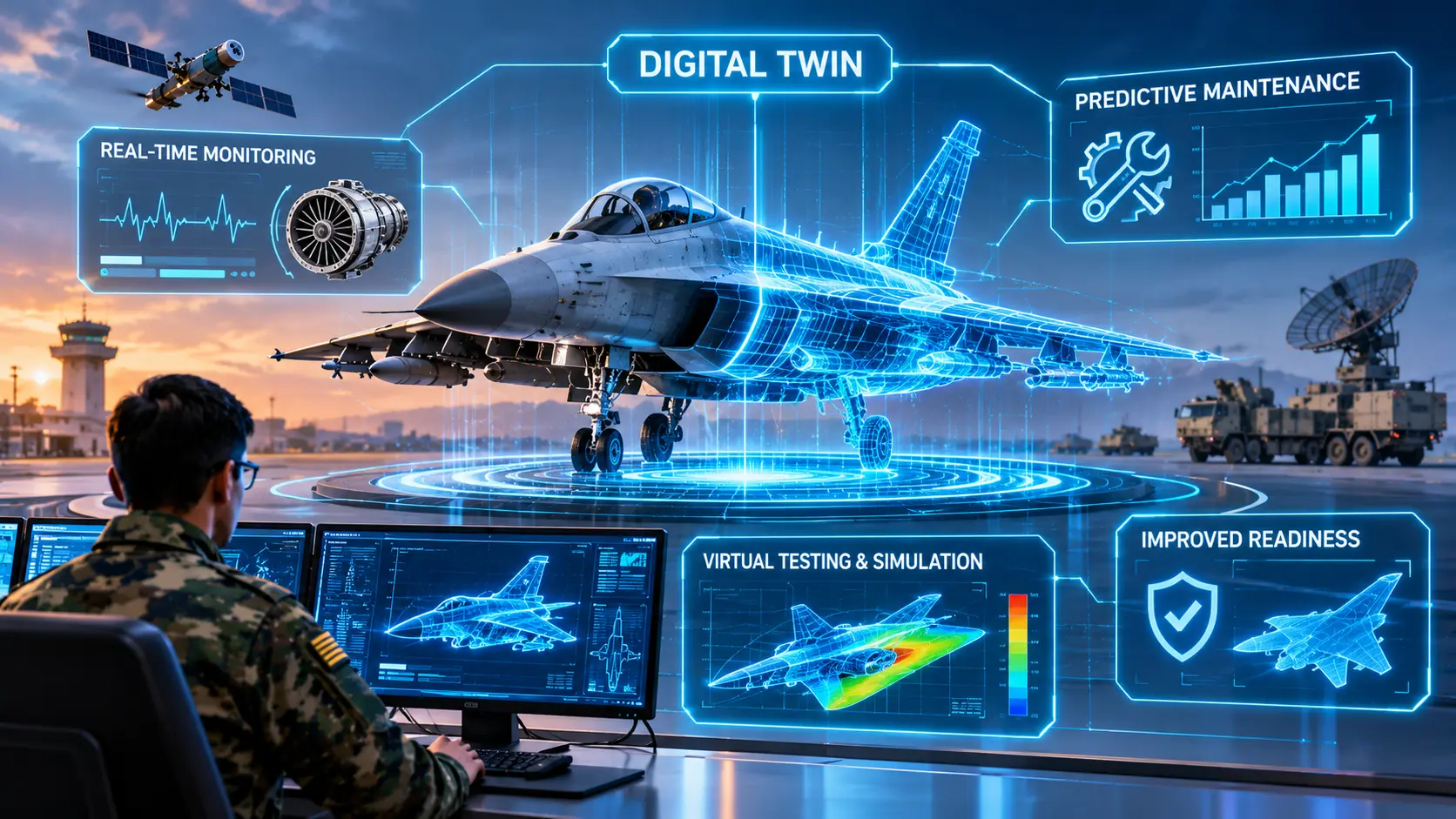
Modern defence equipment is becoming increasingly complex. Aircraft, naval platforms, military vehicles, radar systems and communication networks require continuous monitoring to maintain operational readiness.
Digital twin technology offers a new approach to managing this complexity. A digital twin is a virtual representation of a physical asset, system or process that uses real-world data to reflect its condition and performance.
By connecting sensors, software and analytical tools, digital twins can help engineers understand how equipment behaves under different operating conditions.
Creating a Virtual Version of Defence Systems
Modern defence equipment is becoming increasingly complex. Aircraft, naval platforms, military vehicles, radar systems and communication networks require continuous monitoring to maintain operational readiness.
Digital twin technology offers a new approach to managing this complexity. A digital twin is a virtual representation of a physical asset, system or process that uses real-world data to reflect its condition and performance.
By connecting sensors, software and analytical tools, digital twins can help engineers understand how equipment behaves under different operating conditions.
Predictive Maintenance and Improved Readiness
One of the most promising applications of digital twins is predictive maintenance.
Traditional maintenance often follows fixed schedules or responds after a fault occurs. Digital twin systems can analyse performance data, identify unusual patterns and help estimate when components may require attention.
For defence platforms, this could support better maintenance planning, reduce unexpected equipment downtime and improve the availability of critical systems.
Virtual Testing Before Real-World Deployment
Digital twins can also support engineering and system development. Manufacturers can simulate operating conditions, evaluate design changes and study system behaviour in virtual environments before conducting physical trials.
This approach can help identify potential weaknesses earlier in the development cycle and reduce the time and cost associated with certain testing activities.
Applications may extend across aerospace engineering, vehicle performance, electronics, infrastructure and complex defence equipment.
Opportunities for India's Technology Ecosystem
India's growing defence innovation ecosystem offers opportunities for startups, MSMEs and research institutions to develop digital twin solutions.
Expertise in artificial intelligence, industrial IoT, simulation software, sensor integration, cloud computing and data analytics can contribute to this emerging field.
Collaboration between defence organisations, manufacturers and technology developers will be important in adapting these solutions to operational requirements.
Building Smarter Defence Systems
Digital twin technology represents an important step towards data-driven defence engineering. By combining virtual simulation with real-world performance information, it can help improve equipment management, maintenance planning and system development.
As India strengthens its indigenous defence technology capabilities, digital engineering solutions will play an increasingly important role in building efficient and resilient defence infrastructure.
BDTS 2027 – Forging the Sovereign Battlespace brings together defence leaders, manufacturers, startups, researchers and technology innovators to explore the next generation of defence solutions.