

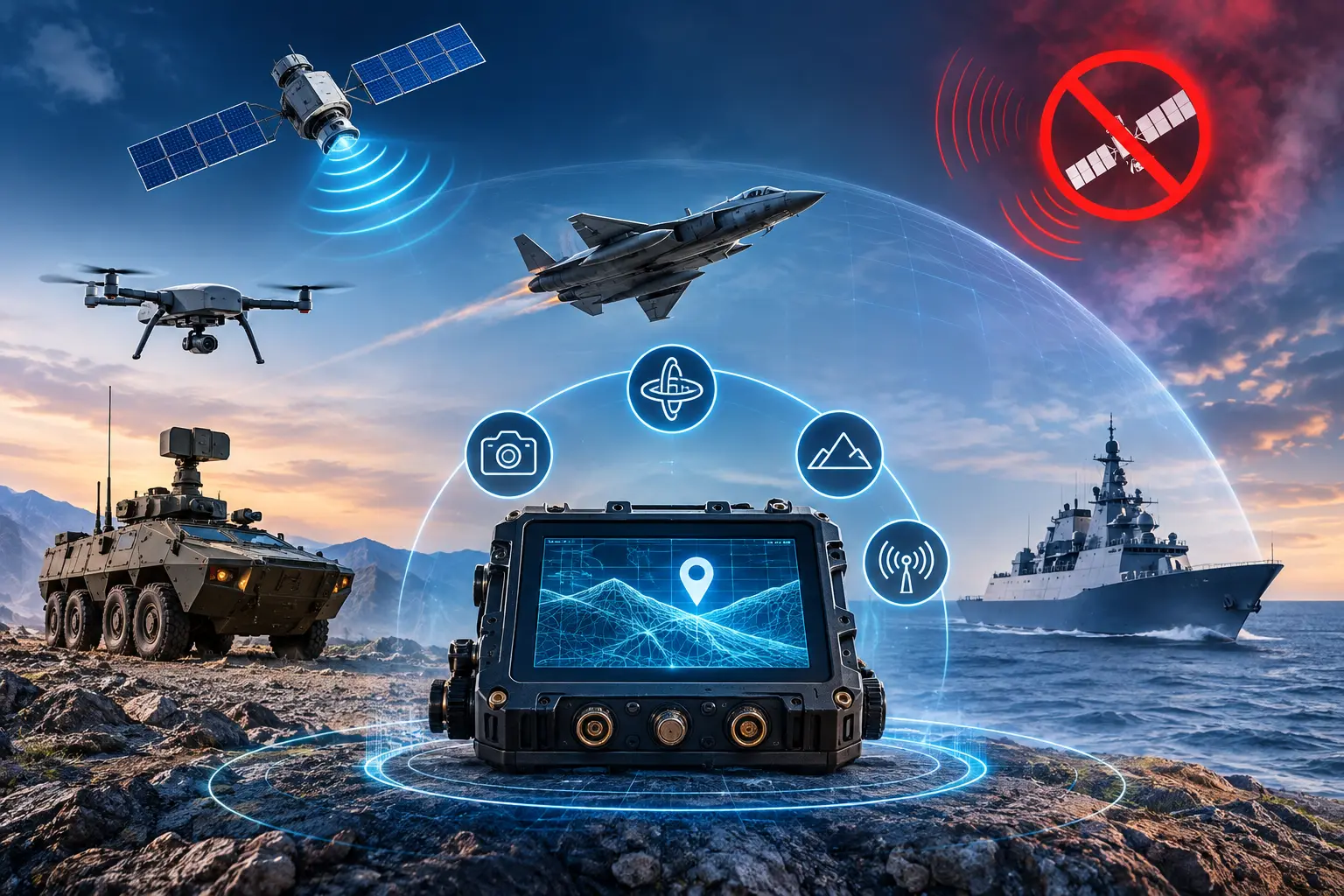
Modern defence operations depend heavily on accurate positioning, navigation and timing. Satellite-based navigation systems support aircraft, unmanned platforms, naval operations, ground vehicles and precision-guided systems.
However, in contested environments, satellite signals can be disrupted, jammed or spoofed. Losing access to reliable navigation can affect mission accuracy, coordination and operational effectiveness.
This has made resilient navigation an important priority in next-generation defence technology.
Why Navigation Independence Matters
Modern defence operations depend heavily on accurate positioning, navigation and timing. Satellite-based navigation systems support aircraft, unmanned platforms, naval operations, ground vehicles and precision-guided systems.
However, in contested environments, satellite signals can be disrupted, jammed or spoofed. Losing access to reliable navigation can affect mission accuracy, coordination and operational effectiveness.
This has made resilient navigation an important priority in next-generation defence technology.
Exploring Alternatives to Satellite Navigation
To maintain operational capability, defence developers are exploring technologies that allow platforms to navigate with reduced dependence on external satellite signals.
Inertial Navigation Systems use internal sensors to estimate position and movement. Visual navigation uses cameras and image processing to understand surrounding environments, while terrain-based navigation compares observed geographical features with stored reference data.
Other emerging approaches include signals of opportunity, advanced sensor fusion and alternative timing technologies. Combining multiple navigation methods can improve reliability when individual systems become unavailable.
India's Opportunity in Indigenous Navigation Technology
For India, developing reliable navigation technologies presents an opportunity to strengthen strategic autonomy and defence preparedness.
Research in precision sensors, advanced electronics, embedded computing, artificial intelligence and navigation algorithms can support indigenous solutions for military platforms.
Startups, MSMEs, academic institutions and established defence manufacturers can contribute specialised components and software. Building domestic expertise in these areas can also reduce dependence on imported technologies and strengthen India's defence supply chain.
From Technology Development to Operational Readiness
Developing resilient navigation systems requires extensive testing under challenging conditions. Accuracy, reliability, electromagnetic resilience, integration and performance across different environments must be evaluated before deployment.
Collaboration between research institutions, defence organisations and industry can help translate innovative concepts into dependable operational technologies.
Strengthening the Sovereign Battlespace
As modern defence operations become increasingly dependent on connected and autonomous platforms, reliable navigation will remain fundamental to mission success.
Developing indigenous positioning, navigation and timing capabilities can strengthen India's ability to operate in contested environments and build a more self-reliant defence ecosystem.
BDTS 2027 – Forging the Sovereign Battlespace provides a platform for defence leaders, technology developers, researchers and industry stakeholders to explore the innovations shaping India's future defence capabilities.