
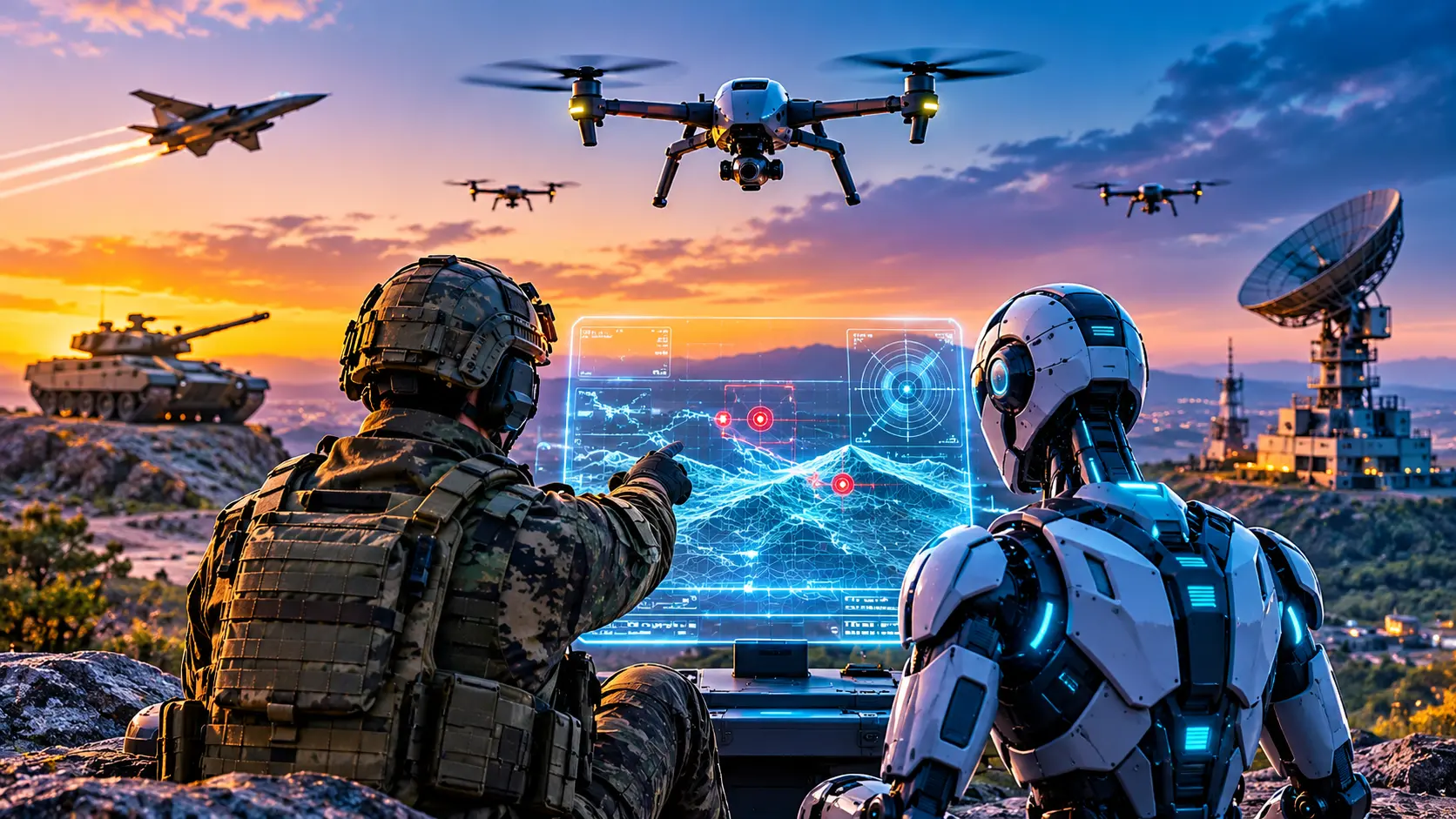
The future of defence is not simply about replacing human capabilities with machines. It is about creating stronger collaboration between military personnel and intelligent technologies.
As artificial intelligence, robotics and autonomous systems advance, defence forces are exploring new ways to combine human judgement with machine speed, accuracy and processing capabilities.
This approach, known as human–machine teaming, could transform how military missions are planned, monitored and executed.
A New Era of Military Collaboration
The future of defence is not simply about replacing human capabilities with machines. It is about creating stronger collaboration between military personnel and intelligent technologies.
As artificial intelligence, robotics and autonomous systems advance, defence forces are exploring new ways to combine human judgement with machine speed, accuracy and processing capabilities.
This approach, known as human–machine teaming, could transform how military missions are planned, monitored and executed.
Combining Human Intelligence with Machine Capabilities
Machines can process large volumes of information, identify patterns and perform repetitive or high-risk tasks. Human operators, meanwhile, bring strategic understanding, contextual awareness and the ability to make complex decisions.
When integrated effectively, these strengths can complement each other across several defence applications.
AI-assisted surveillance can help personnel analyse battlefield information. Unmanned ground and aerial platforms can support reconnaissance and logistics. Intelligent decision-support systems can help commanders evaluate operational scenarios more efficiently.
However, meaningful human oversight remains essential, particularly when systems are involved in critical military decisions.
India's Opportunity in Defence Innovation
India's expanding defence technology ecosystem offers opportunities to develop indigenous human–machine teaming solutions.
Startups, MSMEs, research institutions and established manufacturers can contribute to robotics, AI software, secure communication systems, advanced sensors and autonomous control technologies.
Developing these capabilities domestically can strengthen India's technological independence while creating new opportunities for collaboration between defence users and technology developers.
The Challenges Ahead
Successful human–machine integration requires more than advanced algorithms. Reliability, cybersecurity, interoperability, operator training and clear accountability must be considered throughout development.
Systems must also be tested in realistic operational environments to ensure that they remain dependable under challenging conditions.
Shaping the Next Generation of Defence Capabilities
Human–machine teaming represents an important direction for modern defence development. The ability to combine human expertise with intelligent machines could help build more adaptive, responsive and resilient military capabilities.
BDTS 2027 – Forging the Sovereign Battlespace brings together defence leaders, researchers, startups and industry stakeholders to explore technologies and partnerships shaping India's next generation of defence innovation.