
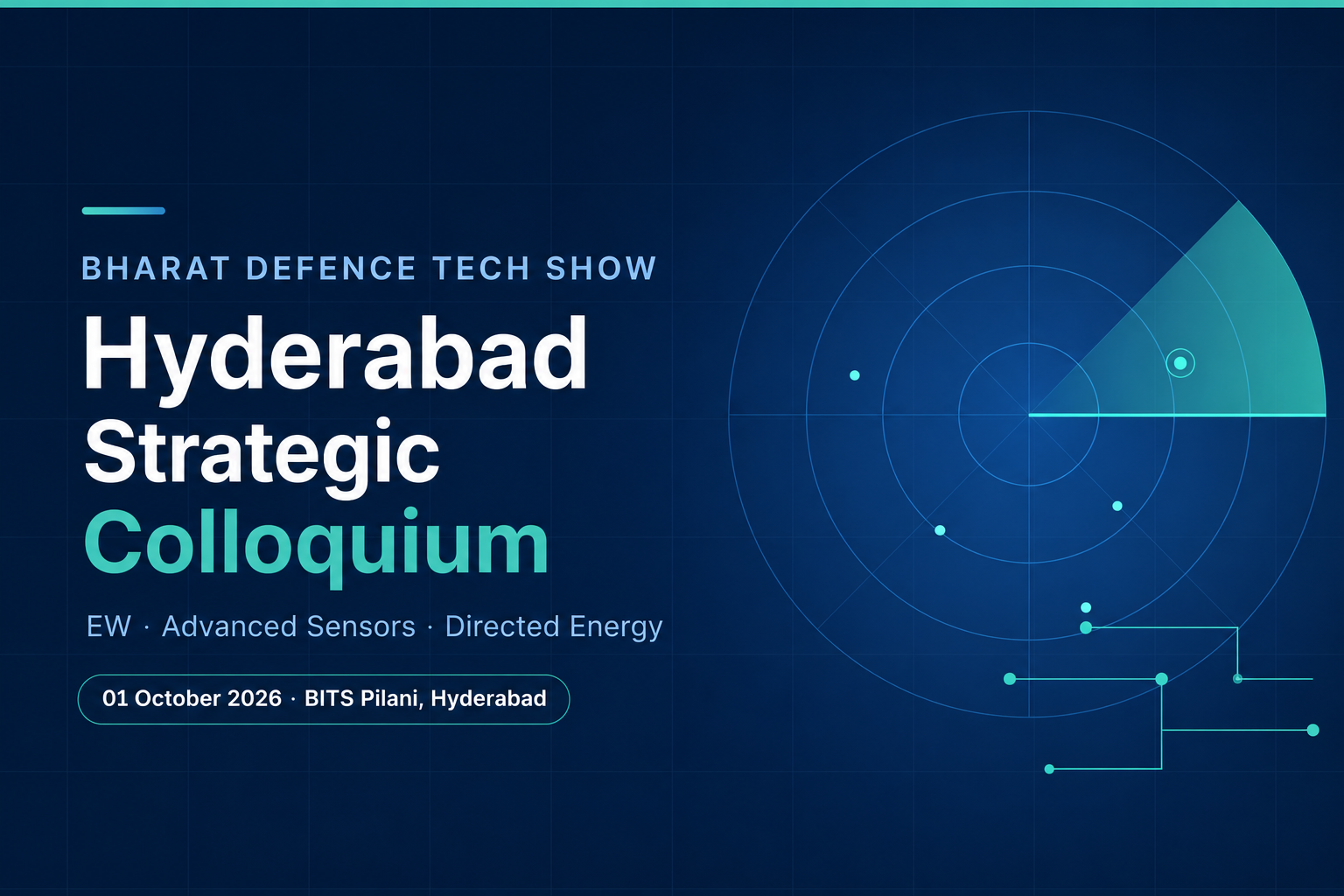
In the modern electromagnetic spectrum, thousands of radar signals overlap, shift and hide. Rapidly identifying and classifying each emitter — friend or foe, threat or noise — is essential for situational awareness and electronic warfare. Automated radar signal characterisation via neural networks is one of the twelve core problem statements at the BDTS Hyderabad Strategic Colloquium 2026, sitting squarely within its AI and signal-processing focus.
The Signal Overload Problem
Human operators cannot keep pace with the density and agility of modern radar emissions. Frequency-hopping, low-probability-of-intercept and cognitive radars deliberately evade recognition. Classifying these signals manually is slow and error-prone, creating a dangerous gap between detection and decision. Automation is the only scalable answer.
How Neural Networks Deliver
Deep learning models trained on large signal libraries can recognise complex modulation patterns and emitter fingerprints far faster than rule-based systems. They generalise to unseen signals, adapt to new threats and run at the edge for real-time response. This demands expertise in machine learning, signal processing and embedded deployment — the deep-tech capability BDTS curates from Indian startups.
Turning Algorithms Into Capability
The Hyderabad colloquium moves such innovation from lab to market by connecting it with Lead System Integrators and armed-forces end users. Teams solving this challenge receive user-end feedback, a Technical Action Report and inclusion in the post-event synthesis report shared with the MOD and DRDO. It is a direct pathway toward the BDTS 2027 finale and official procurement. As spectrum congestion intensifies and emitters grow more agile, automated characterisation will shift from a useful aid to an indispensable component of every electronic-warfare and signals-intelligence system. For India, developing this capability domestically ensures its forces can identify and respond to emerging threats without waiting on foreign updates or support.
Event: BDTS Hyderabad Strategic Colloquium 2026
Date: 01 October 2026
Venue: BITS Pilani, Hyderabad Campus
Website: www.bharatdefencetechshow.com