
India's Counter-Drone Technology Ecosystem: Securing the Skies
The rapid growth of unmanned aerial vehicles (UAVs) has created new opportunities across industries, but it has also introduced security challenges for military installations, critical infrastructure and sensitive airspace. As drones become more accessible and technologically advanced, counter-drone technology is emerging as a significant priority within India's defence technology ecosystem.
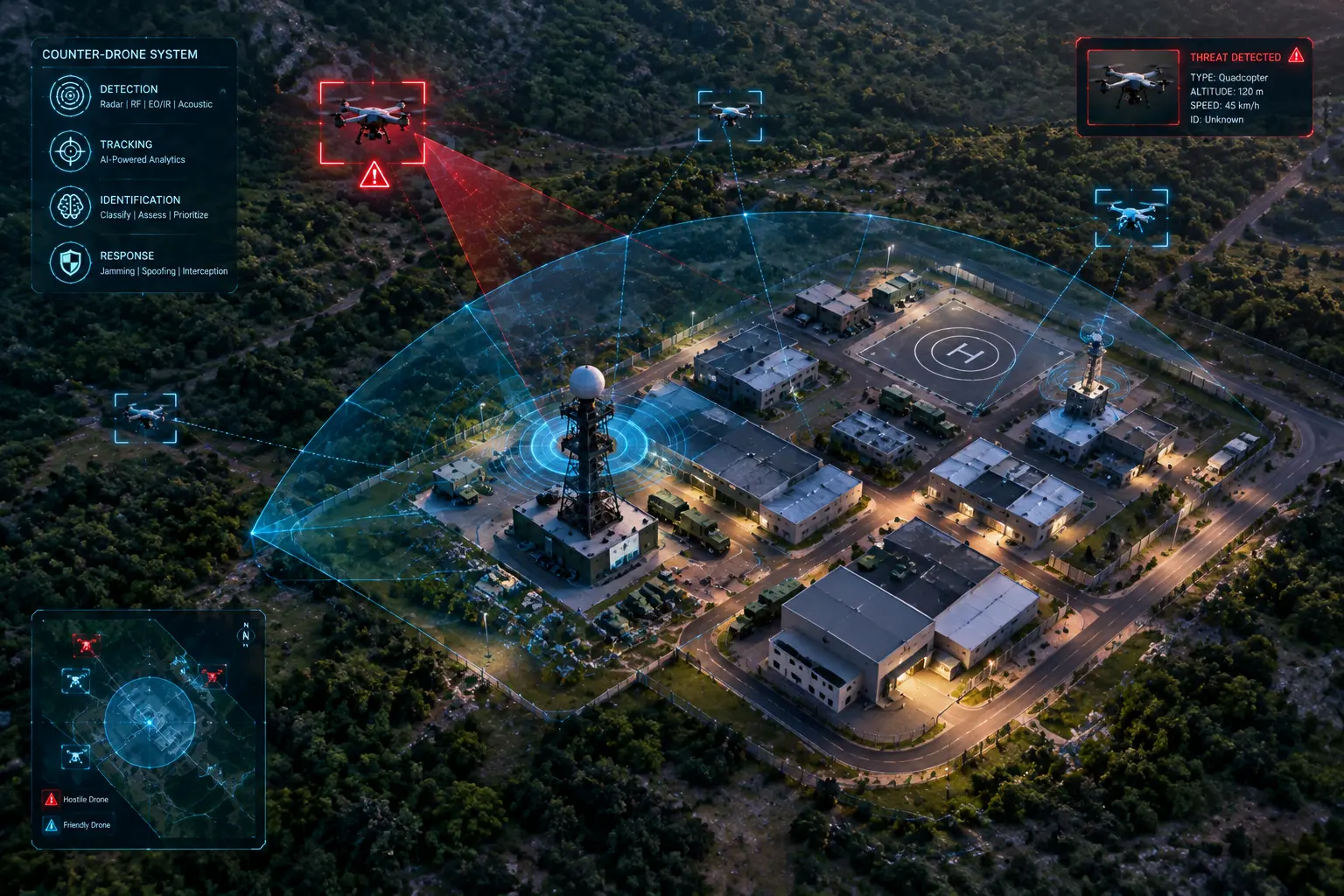
Counter-unmanned aerial systems (C-UAS) combine detection, identification, tracking and response capabilities to address unauthorised or potentially hostile drone activity. Developing reliable, adaptable and indigenous solutions will be important for India's evolving security requirements.
The Technologies Behind Counter-Drone Systems
Modern counter-drone solutions can integrate radar, radio-frequency sensors, electro-optical cameras and acoustic detection technologies. Combining information from multiple sensors can improve detection and help distinguish drones from other objects in the surrounding environment.
Artificial intelligence can support object classification and threat assessment, while electronic warfare technologies may help address certain drone communication and navigation vulnerabilities. The appropriate response depends on the operational environment, applicable regulations and the nature of the threat.
Challenges in Detecting Emerging Drone Threats
Small drones can be difficult to detect because of their size, low radar visibility, limited flight signatures and ability to operate close to buildings or terrain. Crowded environments and interference from other electronic devices can further complicate identification.
Effective counter-drone systems therefore require more than a single detection technology. Sensor integration, rapid information processing, reliable tracking and secure command interfaces are essential to building a coordinated defence architecture.
Opportunities for India's Defence Startups and MSMEs
India's counter-drone ecosystem presents opportunities for startups, MSMEs and research institutions working in radar engineering, embedded systems, AI, computer vision, RF electronics and secure communications.
Indigenous innovation can strengthen domestic supply chains and support the development of solutions suited to India's operational requirements. Collaboration with established manufacturers and defence stakeholders can also help promising technologies progress from prototypes to testing, integration and scalable production.
BDTS 2027: Connecting Innovation with Defence Needs
Bharat Defence Tech Show (BDTS) 2027 provides a platform for engagement across India's defence technology ecosystem. Counter-drone technologies offer an important area for discussion among innovators, manufacturers, researchers and industry stakeholders seeking to address emerging security challenges.
Conclusion
The future of counter-drone technology will depend on intelligent detection, effective sensor integration and reliable response capabilities. By strengthening indigenous research and encouraging industry collaboration, India can continue developing its counter-UAS ecosystem and advance its wider defence technology ambitions.