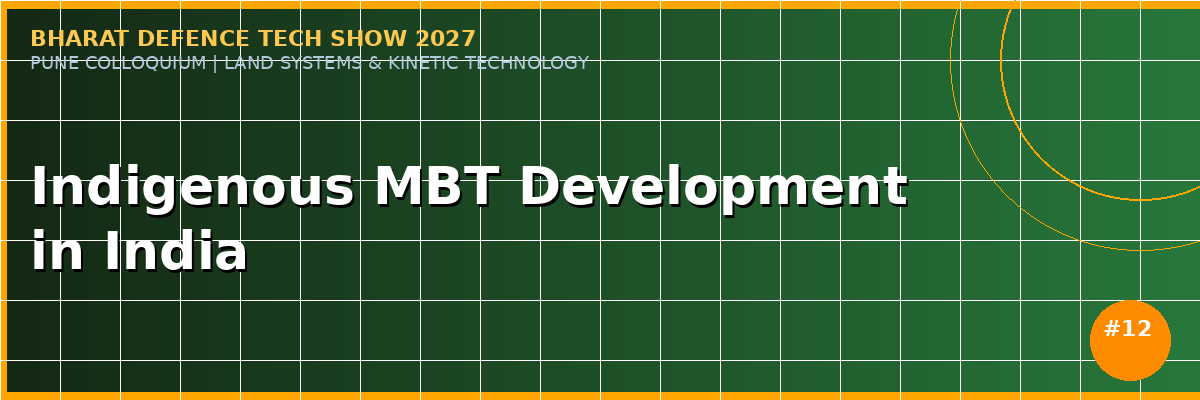
India's development of the Arjun Main Battle Tank represents one of the most ambitious indigenous defence development programmes in the nation's history. From its origins in the 1970s to its current operational service with the Indian Army, Arjun's story is a testament to India's determination to achieve self-reliance in a strategically critical capability — and a source of important lessons for future programmes.
The Origins of the Arjun Programme
The Arjun programme was initiated by DRDO's Combat Vehicles Research and Development Establishment (CVRDE) in Chennai in 1974, driven by the recognition that India needed indigenous capability in armoured warfare rather than perpetual dependence on foreign suppliers. The programme's ambition was to develop a tank that met or exceeded the standards of contemporary designs from the Soviet Union, the United States, and Western Europe.
Technical Challenges and Solutions
Developing an MBT from scratch required solving extremely demanding engineering challenges across propulsion, armour, fire control, and weapons integration. The decision to develop a largely indigenous power pack — the engine and transmission — proved particularly challenging and caused significant programme delays. However, the lessons learned through this process built deep institutional capability in combat vehicle systems engineering that continues to benefit India's defence establishment.
Arjun Mk 1A: Enhanced Capabilities
The Arjun Mk 1A, which entered service with the Indian Army, incorporates significant capability improvements over the original variant. Enhanced armour protection, an improved fire control system, a new missile-firing capability through the main gun, and advanced sighting systems represent a substantial performance upgrade. The Mk 1A also integrates lessons from extensive operational evaluation in diverse Indian terrain conditions.
Future Arjun Variants
Development continues on enhanced Arjun variants that aim to integrate active protection systems, battle management systems, and improved networking capabilities. The CVRDE is also conducting research relevant to the Future Ready Combat Vehicle (FRCV) programme, which envisions a next-generation platform that incorporates AI integration, reduced weight, and enhanced lethality from the design stage.
Building the Ecosystem
One of Arjun's most valuable legacies is the ecosystem of suppliers, technologists, and engineers it has developed. From specialised armour steels to fire control electronics, numerous Indian organisations have built world-class capabilities through participation in the Arjun programme. Expanding this ecosystem to incorporate private sector defence companies — a process actively underway under Atmanirbhar Bharat — is a key strategic priority.
Lessons for Future Indigenous Programmes
Arjun's development journey offers important lessons for future indigenous programmes: the importance of realistic schedule and budget planning; the value of incremental development and testing; the need for close collaboration between development agencies and user departments; and the benefits of international collaboration in specific technology areas while maintaining system-level sovereignty.
Conclusion
India's indigenous MBT capability is a strategic asset built over decades of dedicated effort. Building on the Arjun foundation while incorporating the lessons learned to accelerate and improve future programmes is essential to achieving true Atmanirbharta in armoured warfare. The BDTS Colloquium's focus on land systems provides a vital platform for this community to collectively advance this agenda.
🌐 Website: www.bharatdefencetechshow.com