

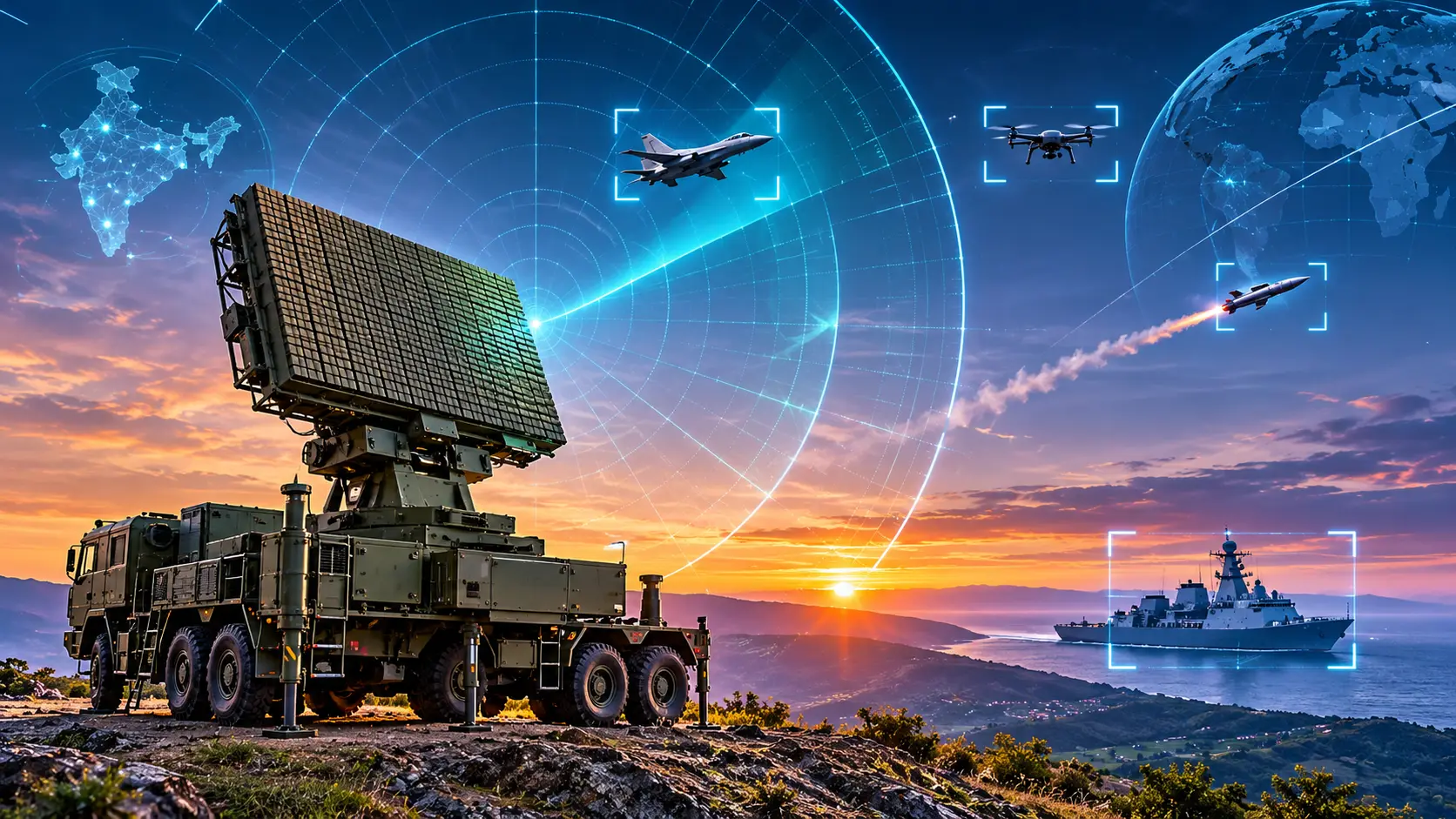
In modern defence operations, the ability to detect and respond to potential threats quickly is critical. Aircraft, drones, missiles and other emerging aerial platforms are becoming increasingly sophisticated, creating new demands on conventional surveillance systems.
Radar technology remains a fundamental part of air defence and battlefield awareness. However, changing operational requirements are driving the development of faster, more accurate and adaptable radar systems.
The Changing Landscape of Defence Surveillance
In modern defence operations, the ability to detect and respond to potential threats quickly is critical. Aircraft, drones, missiles and other emerging aerial platforms are becoming increasingly sophisticated, creating new demands on conventional surveillance systems.
Radar technology remains a fundamental part of air defence and battlefield awareness. However, changing operational requirements are driving the development of faster, more accurate and adaptable radar systems.
From Conventional Radar to Advanced Detection Systems
Next-generation radar technologies are designed to improve detection, tracking and information processing across complex environments.
Active Electronically Scanned Array (AESA) radar systems use multiple transmit-receive modules to steer radar beams electronically rather than relying on mechanical movement. This enables rapid beam steering, multi-target tracking and greater operational flexibility.
Other developments include passive radar, low-probability-of-intercept techniques, advanced signal processing and compact radar systems designed for unmanned platforms.
Together, these technologies can strengthen surveillance capabilities across air, land and maritime environments.
The Role of Artificial Intelligence and Advanced Electronics
Artificial intelligence is creating new possibilities in radar data analysis. Intelligent algorithms can help classify detected objects, distinguish potential threats from background clutter and support faster interpretation of complex radar information.
Advances in semiconductor technologies, particularly gallium nitride (GaN), are also contributing to the development of high-performance radar components.
These developments create opportunities for indigenous innovation in processors, antennas, power modules, signal-processing software and electronic subsystems.
India's Opportunity in Indigenous Radar Development
India's defence manufacturing ecosystem has significant potential to develop advanced radar technologies through collaboration between defence research organisations, startups, MSMEs and established manufacturers.
Domestic expertise in RF engineering, semiconductor design, embedded systems and precision manufacturing can help strengthen the country's radar supply chain and reduce dependence on imported critical components.
Building a More Aware and Resilient Battlespace
As defence operations become increasingly data-driven, advanced radar systems will remain essential to early warning, threat detection and coordinated response.
Investing in indigenous radar research, manufacturing and system integration can strengthen India's technological capabilities and support a more resilient defence ecosystem.
BDTS 2027 – Forging the Sovereign Battlespace brings together defence leaders, researchers, startups and industry stakeholders to explore the technologies shaping India's next generation of defence capabilities.